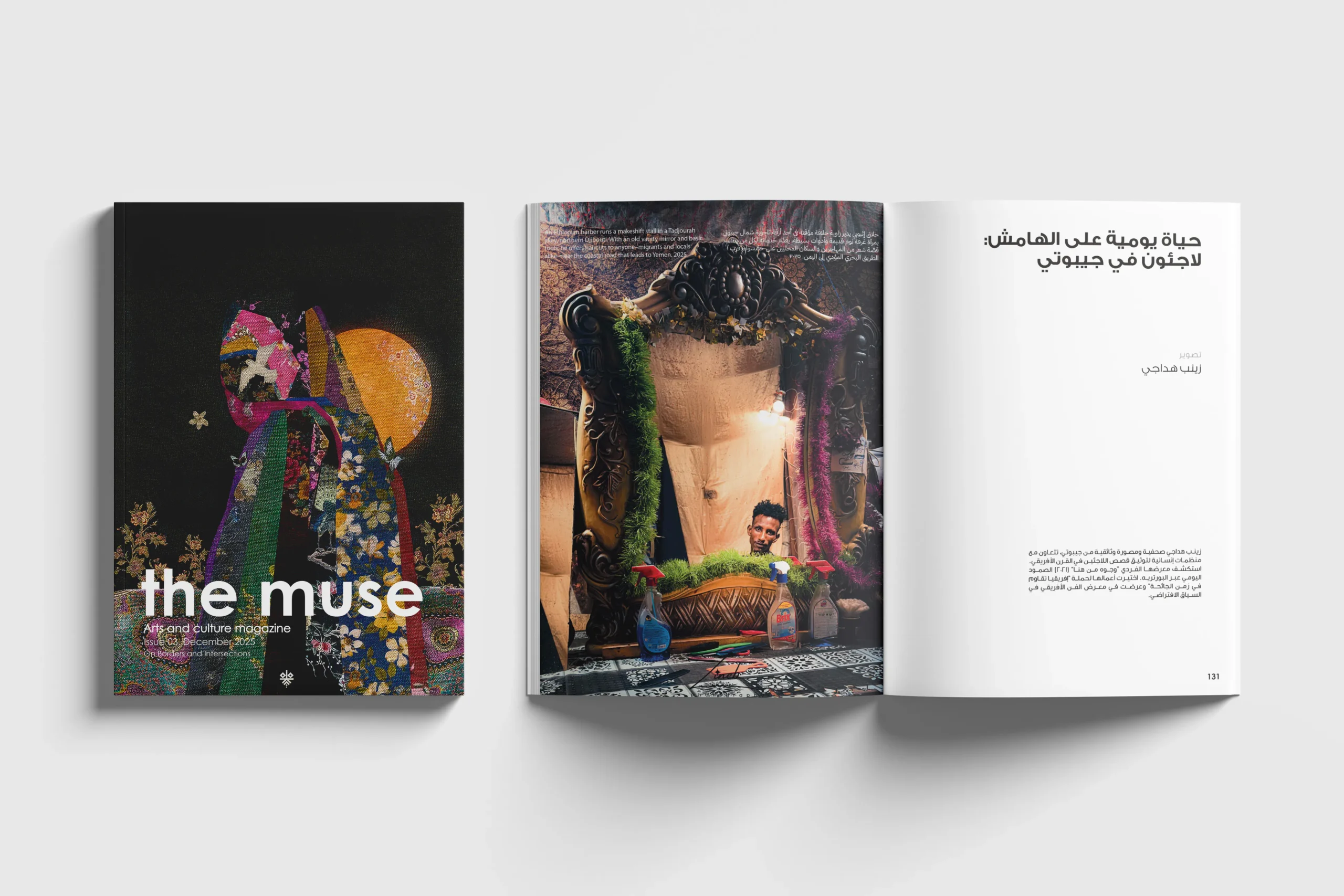
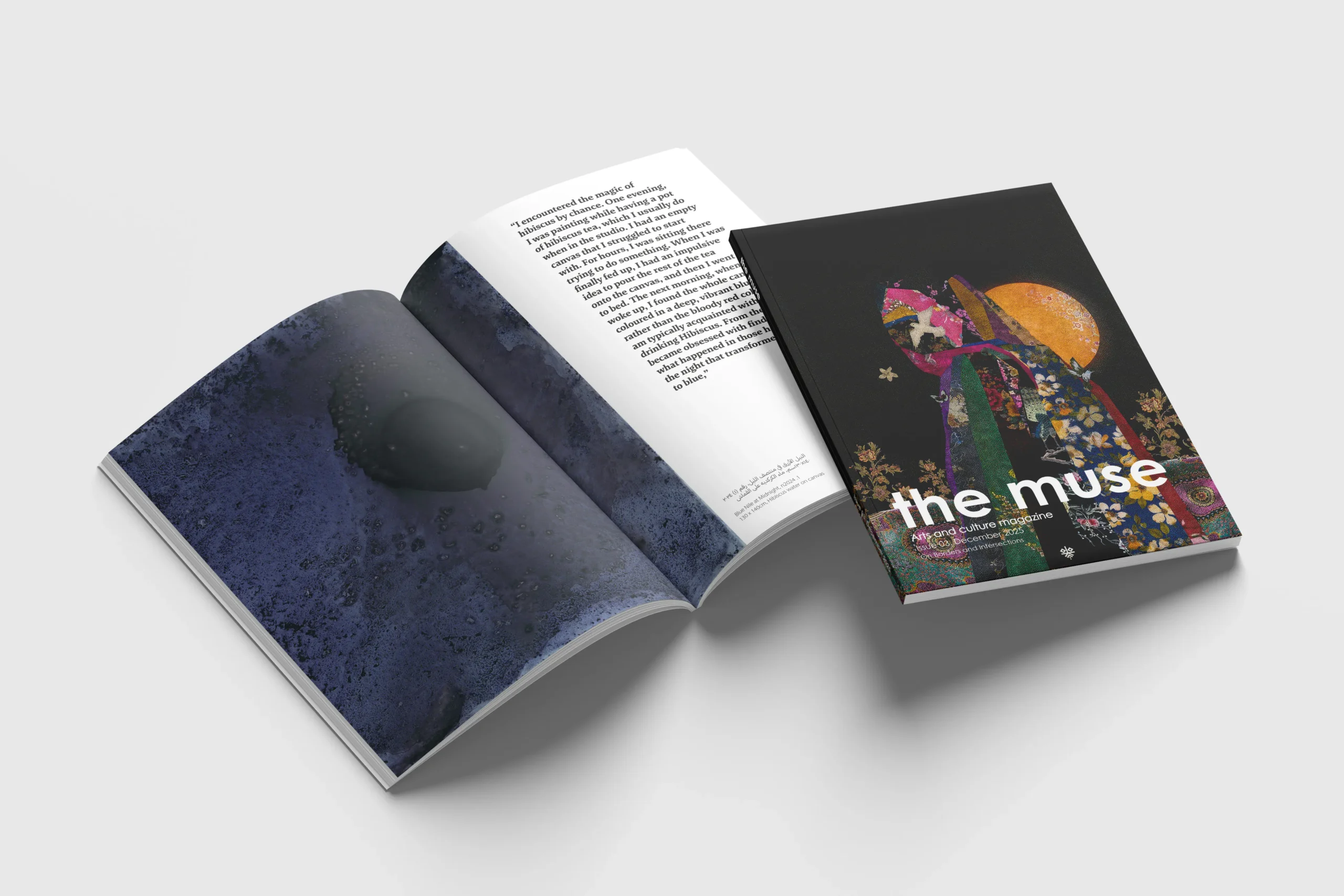
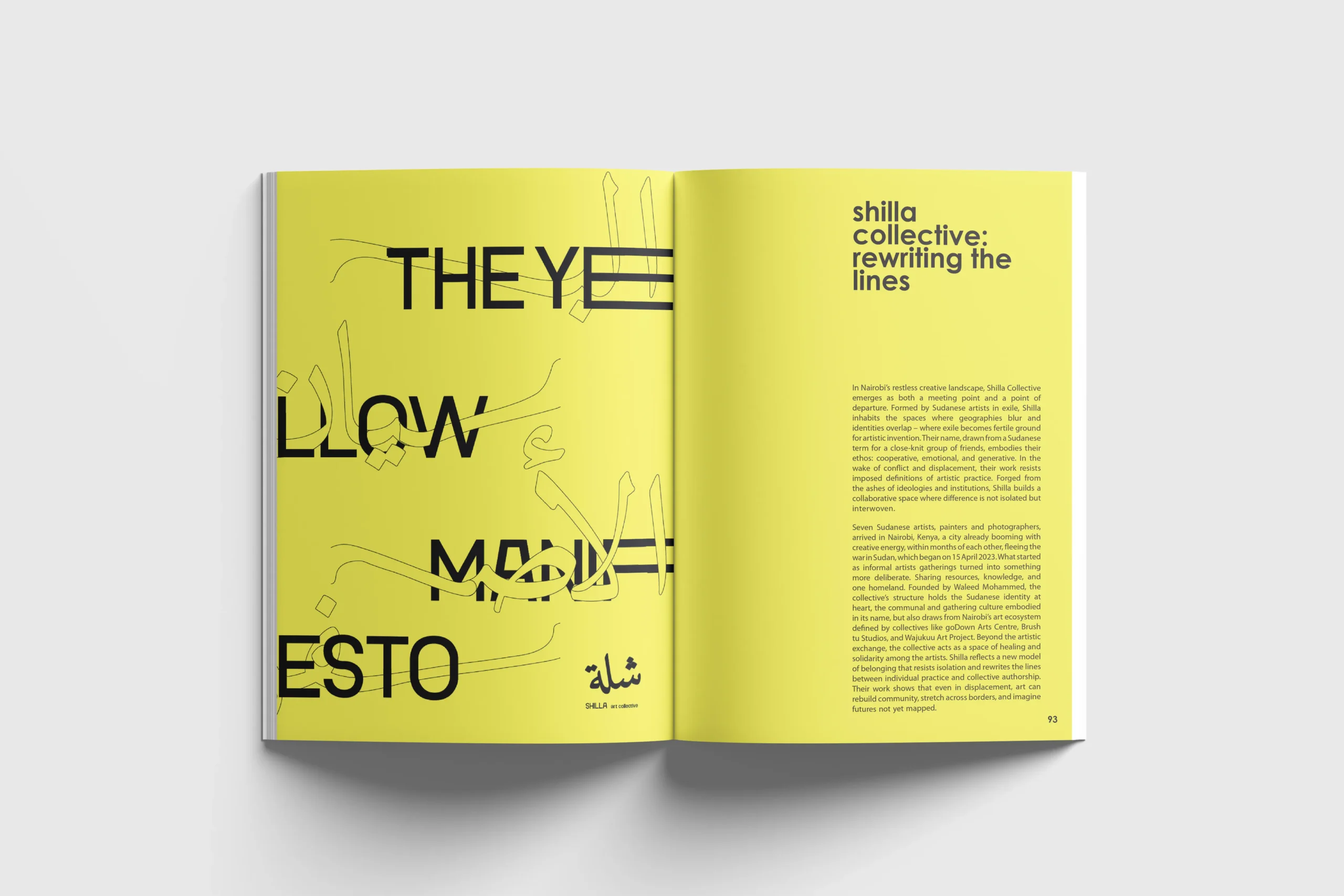
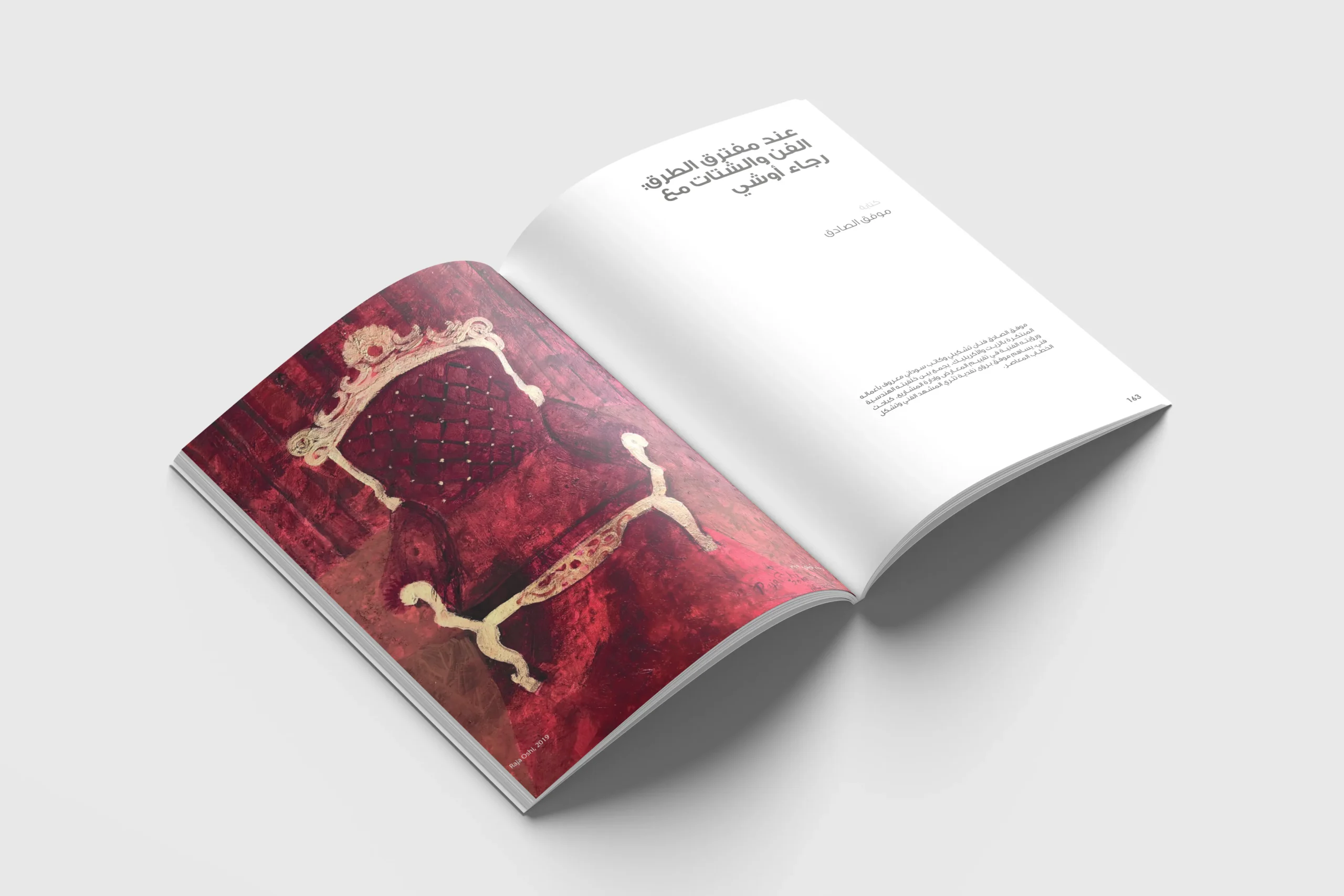
The Muse Magazine Issue 03: On Borders & Intersections
Annual Magazine

We are pleased to present the third issue of The Muse Magazine, on “Borders and Intersections”. This issue focuses on the expansion of Sudanese art and its openness to the Arab and African environments.
Through this issue, we open a wide space for the exchange of creative visions and experiences following the displacement of Sudanese artists within the region and their engagement with new artistic scenes. We highlight the continuity of artistic contribution, from the pioneers of the Khartoum School to contemporary generations, presenting critical essays, artistic analyses, and personal narratives that reframe the artistic discourse in light of current challenges and opportunities.
The Muse Magazine team extends its sincere gratitude to everyone who contributed to and enriched this issue, including artists, critics, and researchers.
On Borders and Intersections
Editor's Note
Dear readers,
In the months of developing this issue, we repeatedly questioned the idea of borders and intersections over and over. What if the intersection is not where two or more roads meet? What if neither borders nor intersections are merely geographical dimensions? And what is art in borders and intersections anyways?
The ongoing war in Sudan is at the heart of everything we do – and art is no exception. Sudanese art has moved far beyond the country’s borders, reaching neighbouring nations in Africa, the Middle East, and many other parts of the world. It has travelled with its people – artists among the 12 to 24 million Sudanese who have been displaced by the war.
Yet in the midst of conflict, a renaissance has been unfolding. Sudanese storytelling is experiencing a revival like never before. Through this creative resurgence, Sudanese artists, writers, and thinkers are reclaiming the narrative, redefining how Sudan is seen and understood.
In this third issue of The Muse Magazine: On Borders & Intersections, you’ll find stories that celebrate resilience, creativity, and shared experiences through art. These stories remind us that art and storytelling can live anywhere in the world, no matter where the artist finds themselves. They show us that borders are not boundaries; they can be pushed, reimagined, or even moved. And in doing so, people, and their art, find connection, overlap, and intersect in countless ways.
In the pages of this issue, Samah Fawzi echoes, “No two journeys of displacement, or movements, are ever the same. Every journey is deeply personal and acutely intimate.” How does this happen? Through art in all its forms and through those who create it. Art remains one of our most powerful tools to bridge divides and help us connect.
Working on this issue was, in itself, an act of crossing. A process of unlearning and relearning. We began to understand borders and intersections not merely as geographical lines drawn across land but as temporal phenomena. Chibuye Changewe reflects on this beautifully as a friendly witness to the work of a Sudanese artist in the Netherlands, positioning the night as a pivotal moment and space for when the hibiscus flowers used as medium shifts its colors in the dark. Time emerges as a border of its own: it separates, it marks, and it opens and closes possibilities.
The issue also features emerging artists and writers like Hadi Bakhit, whose use of multimedia in art becomes a deliberate act of remembering the details of his journey. The journey of finding homes, finding people, finding oneself, and in some cases finding an audience among strangers.
Dr. Fathi Osman explores how art sits in the intersection of the clashes of multiple identities but also the dialogue between these identities, taking art schools and movements in Sudan as an example. Mahmoud Atta delves into bodily practices; how the ‘exiled’ body navigates, remembers, and reflects the experiences of migration and cross-border presence. While Valerie Hansch and Tanzil Adam document artistic endeavors in exiled spaces as a form of witnessing the war.
At the end, it is through the personal, not the final product, that the issue On Borders and Intersections is built. We hope the stories inside this issue inspire you, move you, and remind you of the enduring power of creativity, even in times of displacement and uncertainty. And we dearly thank the artists and writers who allowed us to learn of their journeys. Wishing you a good read.
Ola and Sara
About the Guest Editor:
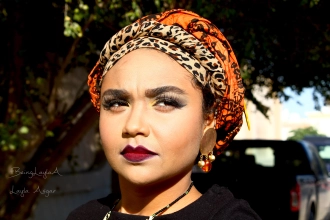
Ola Diab is a Sudanese journalist based in Qatar. She is the deputy editor of Marhaba Information Guide, Qatar’s premier information guide, and the founder and editor of 500 Words Magazine, a Sudanese cultural publication. She graduated from Northwestern University in Qatar (NU-Q) in 2012 with a Bachelor of Science in Journalism and has since built a career with extensive experience in Qatar’s print and digital media industry. Over the years, she has contributed to some of Qatar’s most notable magazines and media outlets, including Marhaba, Qatar Today, GLAM, T Qatar – The New York Times Style Magazine in Qatar, BQ and BQ Plus, Qatar Visitor, and Qatar Happening. She has interviewed prominent figures such as singer Sami Yusuf, photographer Reza Deghati, calligraffiti artist El Seed, beauty expert and TV personality Joelle Mardinian, Grammy award-winning musician Amii Stewart, fashion designer Anniesa Hasibuan, NFL player Husain Abdullah, singer Fady Harb, and archaeologists Charles Bonnet and Steffen Wenig, as well as Glenn Leonard of The Temptations, among others. Her documentary The Unveiled, which she co-directed and co-produced, won third place at the Women’s Voices Now film festival in California, USA, in 2011. She is also known for her documentary Sudan: Divided Identity, Divided Land.”